

History of Thai Massage Therapy
Thai massage is an unique and old kind of bodywork that has been exercised for thousands of years. It incorporates aspects of yoga exercise, acupressure, and energy line work, making it a holistic strategy to wellness and health. This type of massage is renowned for its capacity to improve blood flow, ease joint discomfort, and ease muscle tension. As it continues to get popularity worldwide, Thai massage remains an indispensable part of standard Thai medicine and is a prominent offering at many spas, consisting of those in Bangkok and Chiang Mai.
Beginnings of Thai Massage Therapy
Thai massage therapy is believed to have actually come from over 2,500 years ago in India. It is related to Jivaka Kumar Bhaccha, a contemporary of the Buddha, that is considered as the dad of Thai medicine. The technique was given Thailand together with Buddhism and was typically supplied by monks as a part of spiritual method. This link to spiritual and all natural health remains integral to Thai massage therapy today, though it has developed to include both spiritual and non-religious applications.
Impacts from Typical Medicine
In time, Thai massage therapy has actually absorbed impacts from various conventional medicine techniques, consisting of Indian Ayurveda and Chinese medication. These influences have actually added to its distinctive concentrate on energy lines known as “Sen” lines, which are believed to facilitate the flow of energy with the body. This approach aims to enhance general health and wellness by stabilizing power levels and enhancing blood circulation.Read here best-massage-valencia.com At our site In addition, organic medications and compresses are usually incorporated into Thai massage methods to additional promote recovery and leisure.
Advancement Over the Centuries
Throughout the centuries, Thai massage has evolved considerably while keeping its typical origins. Massage colleges in Thailand have contributed in defining and showing these methods, guaranteeing that specialists are well-versed in this old art. Modern Thai massage therapy currently consists of variations such as full-body massage therapy, foot massage, and even hybrid types including components of Swedish and various other Western massage therapies. In spite of these adaptations, the core principles of Thai massage-promoting leisure, enhancing blood circulation, and attending to muscle soreness-remain unmodified.
The advancement of Thai massage therapy has actually not decreased its health benefits, which include reduced muscle tension and far better high blood pressure monitoring. As rate of interest expands, a lot more people are seeking to learn this type of massage therapy with massage therapy training courses, protecting its abundant custom for future generations.
Principles of Thai Massage Therapy
Thai massage therapy is a standard kind deeply rooted in Thai medicine and affected by various other methods. It is not just a physical control of the body however rather a detailed strategy focused on balancing body and mind. Unlike Western massages such as Swedish massage therapies, Thai massage therapy focuses on stabilizing the circulation of energy throughout the body, emphasizing the value of energy degrees and the interconnectedness of body features.
Among the core principles is to boost overall well-being by enhancing blood flow, which consequently adds to better blood circulation, controling high blood pressure, and easing muscle tension or tight muscular tissues. Specialists often use techniques to resolve muscle pain and joint pain, making this type of massage advantageous for those with physical discomfort.
The Duty of Power Lines (Sen)
Central to Thai massage therapy is the principle of energy lines, or “Sen.” According to typical Thai ideas, energy lines are channels through which life power moves throughout the body. These lines are taken into consideration essential for preserving physical and psychological balance. Clogs or inequalities in these energy lines can cause pain, health problem, or decreased vitality.
Thai massage therapy therapists aim to promote these lines to bring back the all-natural circulation of power, advertising wellness and vigor. By applying pressure along these pathways, therapists can assist alleviate tight muscle mass, improve joint flexibility, and enhance muscular tissue function. This concentrate on Sen lines differentiates Thai massage therapy from various other kinds of massage therapy and highlights its duty in conventional medicine.
Methods Made Use Of in Thai Massage Therapy
Thai massage therapy employs a series of strategies designed to assist in the flow of energy and enhance physical wellness. Practitioners typically start with gentle shaking motions and progression to much deeper, much more targeted manipulations, including:
- Acupressure: Applying pressure to specific points along the Sen lines to release power obstructions and decrease muscle mass tension.
- Extending: Using yoga-like positions to enhance versatility, improve blood circulation, and relieve muscular tissue pain.
- Rhythmic Compression: Utilizing rhythmic stress with the palms, thumbs, joints, and feet to boost the body, helping to relax aching muscular tissues and enhance blood circulation.
- Joint Mobilization: Dealing With joints to enhance variety of movement and ease joint discomfort.
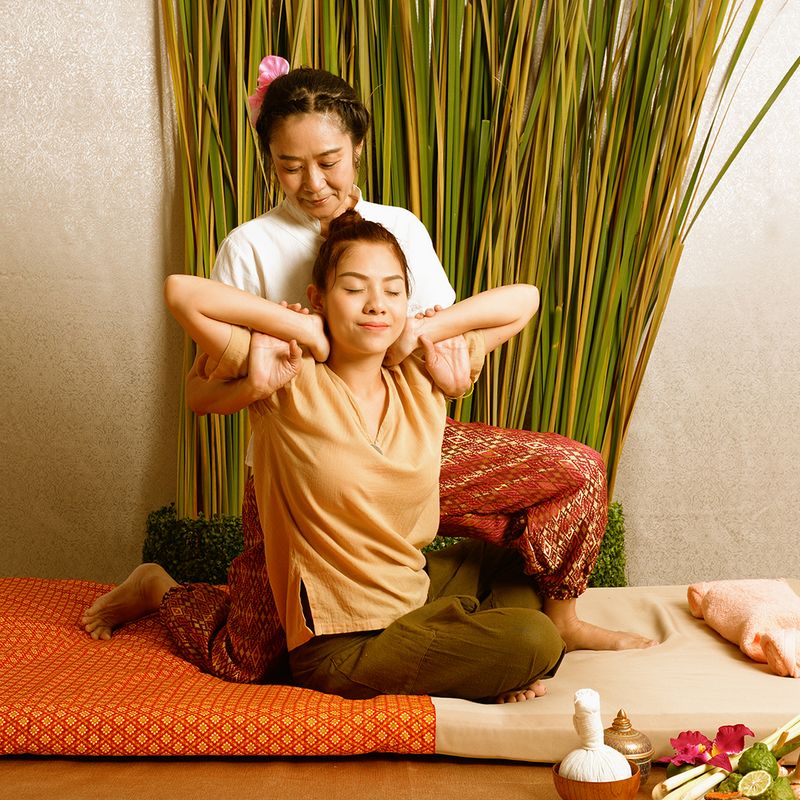
The techniques used in Thai massage therapy are usually part of massage therapy programs showed at specialized massage therapy schools, where professionals discover to mix these methods into an alternative form of bodywork. Whether experienced as a foot massage therapy or a full-body massage therapy, Thai massage therapy uses countless health and wellness advantages, making it a prominent selection for those seeking both relaxation and restorative outcomes.
Benefits of Thai Massage Therapy
Thai massage is an ancient practice that has been given with generations, offering a range of physical, mental, and psychological advantages. This typical form of massage incorporates aspects of acupressure, Indian Ayurvedic principles, and aided yoga exercise poses. Unlike Western massage therapies such as Swedish massages, Thai massage therapy involves a holistic approach focusing on the circulation of energy throughout the body. This method, deeply rooted in Thai medication, is aimed at boosting total health by balancing energy degrees and using the natural recovery procedures of the body.
Physical Advantages
Among the main physical advantages of Thai massage therapy is its capacity to improve blood circulation and circulation. By targeting power lines, or “sen,” massage therapy therapists work to enhance blood circulation, which can favorably influence blood circulation and blood pressure. This enhancement in circulation is essential for delivering oxygen and nutrients to muscular tissues and cells, promoting recovery and revitalization.
Thai massage is particularly effective in reducing muscle mass tension and discomfort. By using various techniques such as stretching and deep stress, it assists launch tension and limited muscles, thus reducing muscle pain and joint pain. Lots of people who experience conditions such as neck and back pain and arthritis find alleviation via this form of massage.
Furthermore, Thai massage therapy help in enhancing flexibility and increasing range of activity. The assisted extending strategies typically exercised in massage colleges assist elongate muscular tissues, consequently boosting position and reducing the danger of injuries. The overall impact is a better physical state that can improve daily activities and athletic performance.
Psychological and Psychological Benefits
Beyond the physical world, Thai massage uses several mental and psychological benefits. It is renowned for its capability to soothe stress and anxiety and lower stress and anxiety. By advertising relaxation and encouraging mindfulness, Thai massage therapy assists relax the nerve system, which can cause boosted psychological clearness and a decline in anxiety degrees.
This form of massage likewise adds to boosting energy levels. By boosting the flow of energy throughout the body, individuals often experience a restored feeling of vitality and a general boost in mood. This can lead to enhanced efficiency and an extra balanced emotion.
Furthermore, Thai massage can assist in fading psychological exhaustion and enhancing the capacity to focus. The concentrated breathing and meditation-like components of this method can give psychological clearness and assistance psychological durability. Over time, routine recipients of Thai massage therapy might observe an enhancement in their total mental health and wellness and psychological stability.
Timing and Frequency of Procedure
The timing and frequency of your Thai massage therapy sessions can influence just how well you experience its wellness benefits. For someone new to this form of massage, starting with a much shorter session, such as 30 to 60 mins, might be helpful. Experienced individuals might opt for a full-body massage therapy that can last longer. Regular sessions, possibly every two to 4 weeks, can help keep blood flow and take care of muscle mass tension successfully.